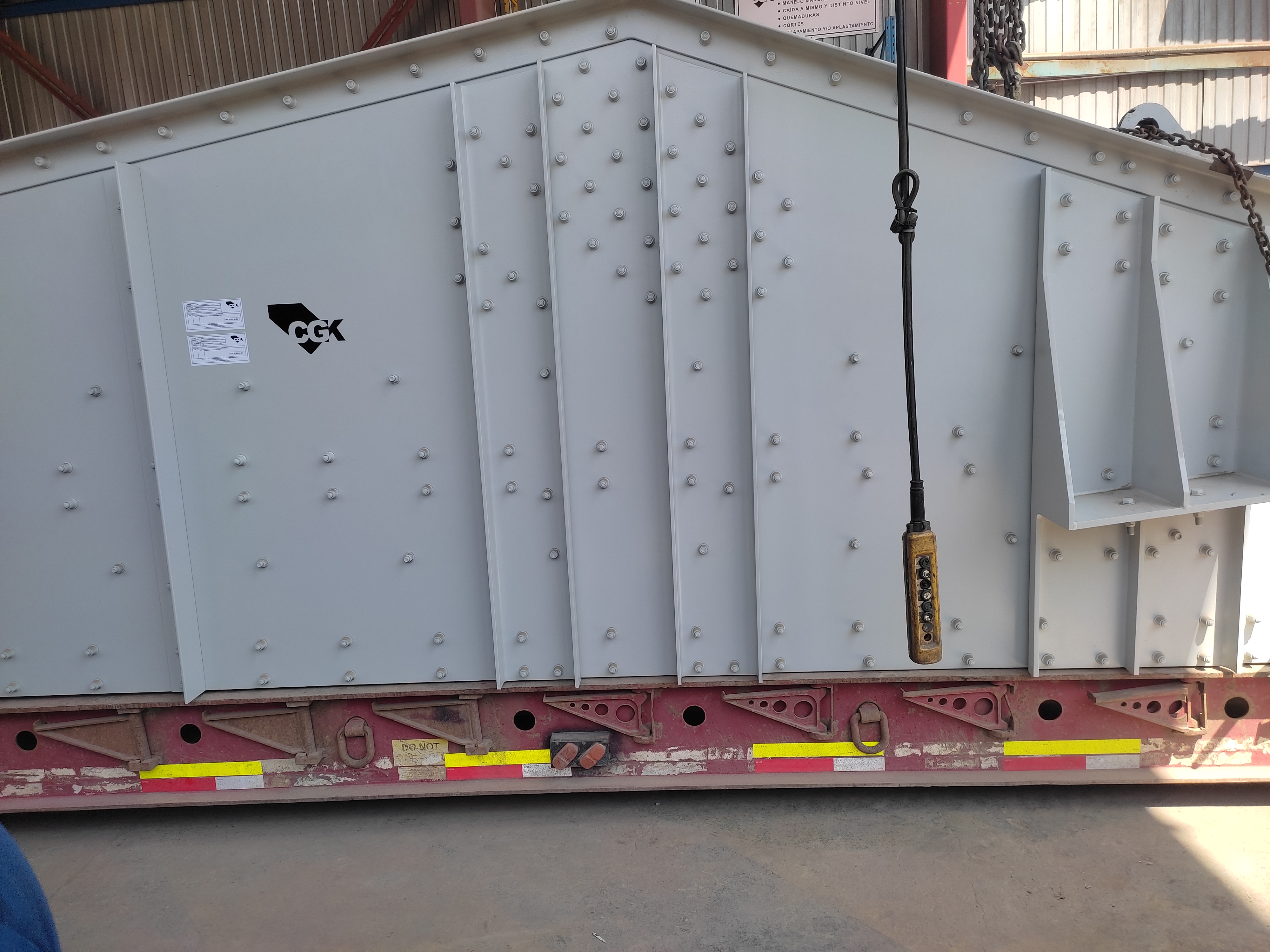
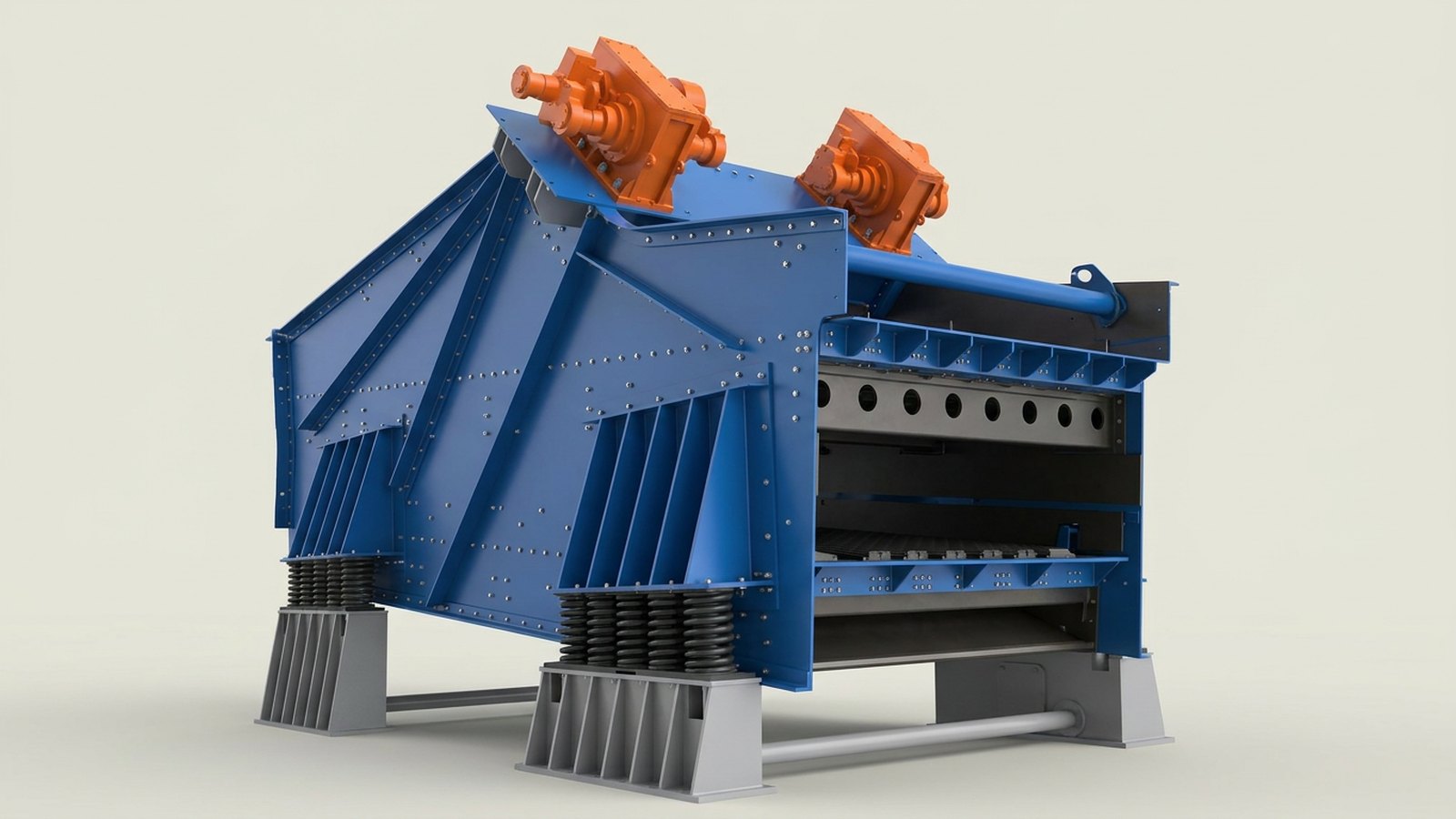
Type 01 · Bolted vibrating screen
 Contact us
Screens and sieves are among the most demanding components we build: they work under constant vibration, and that vibration fatigues welded joints until they crack.
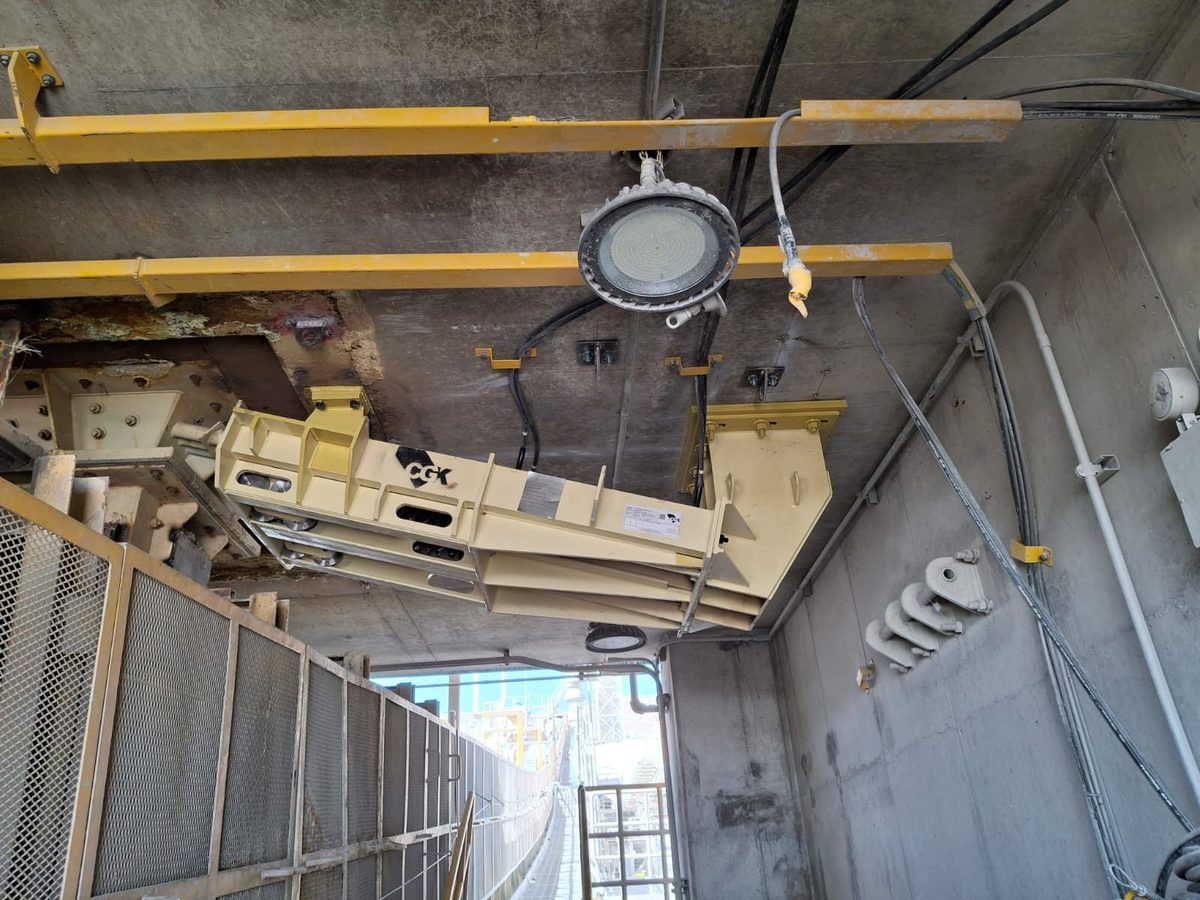
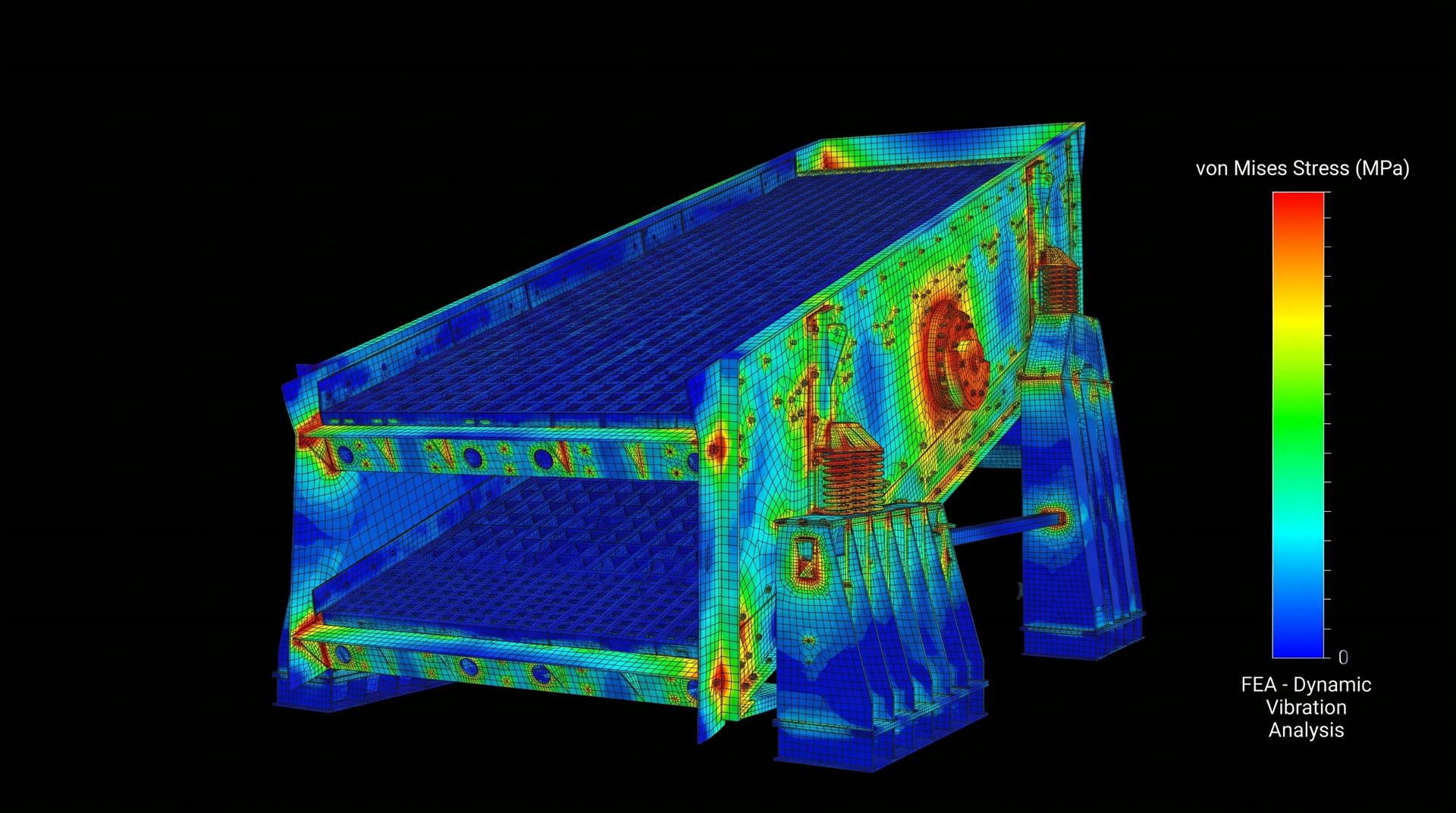
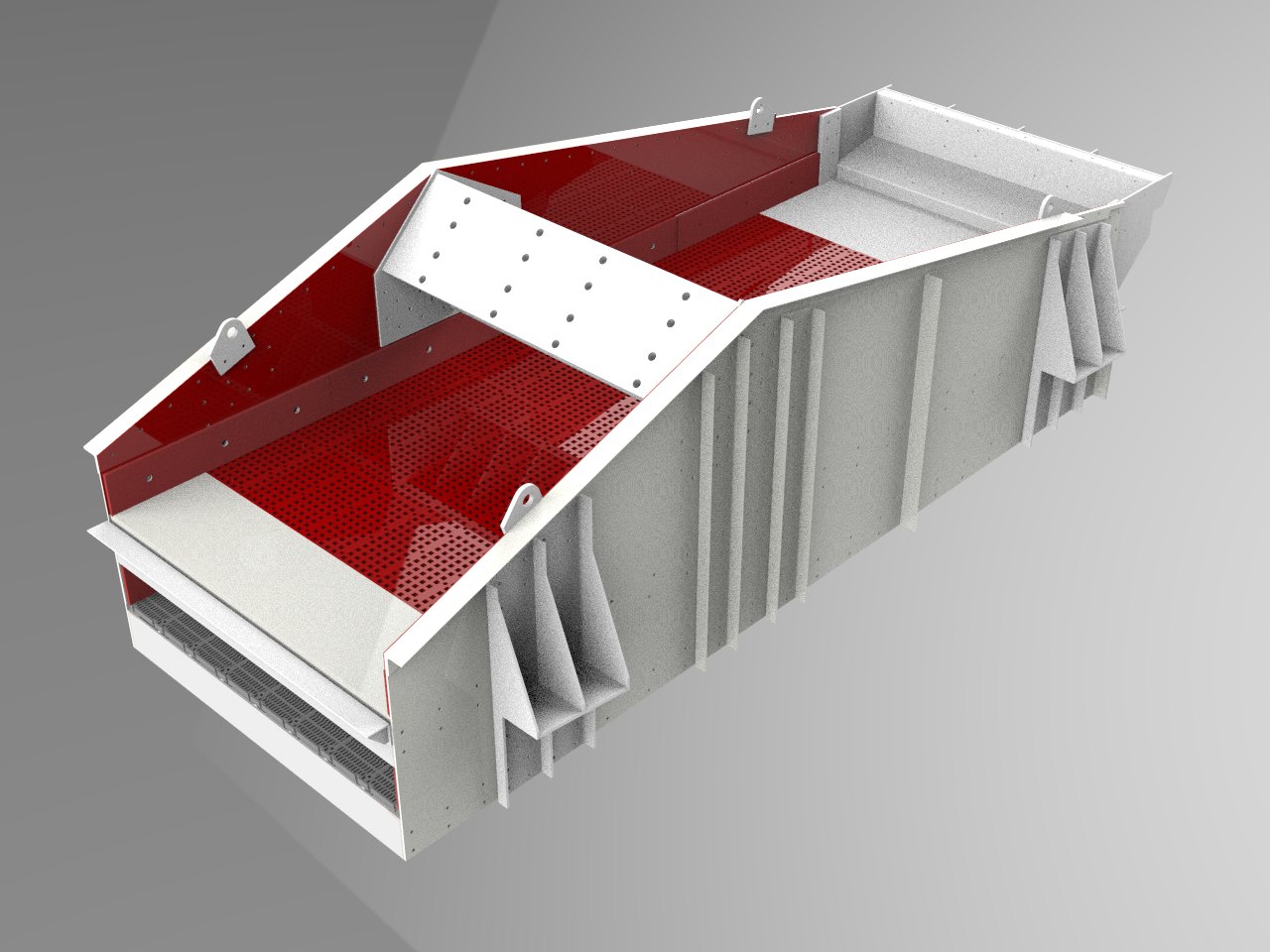
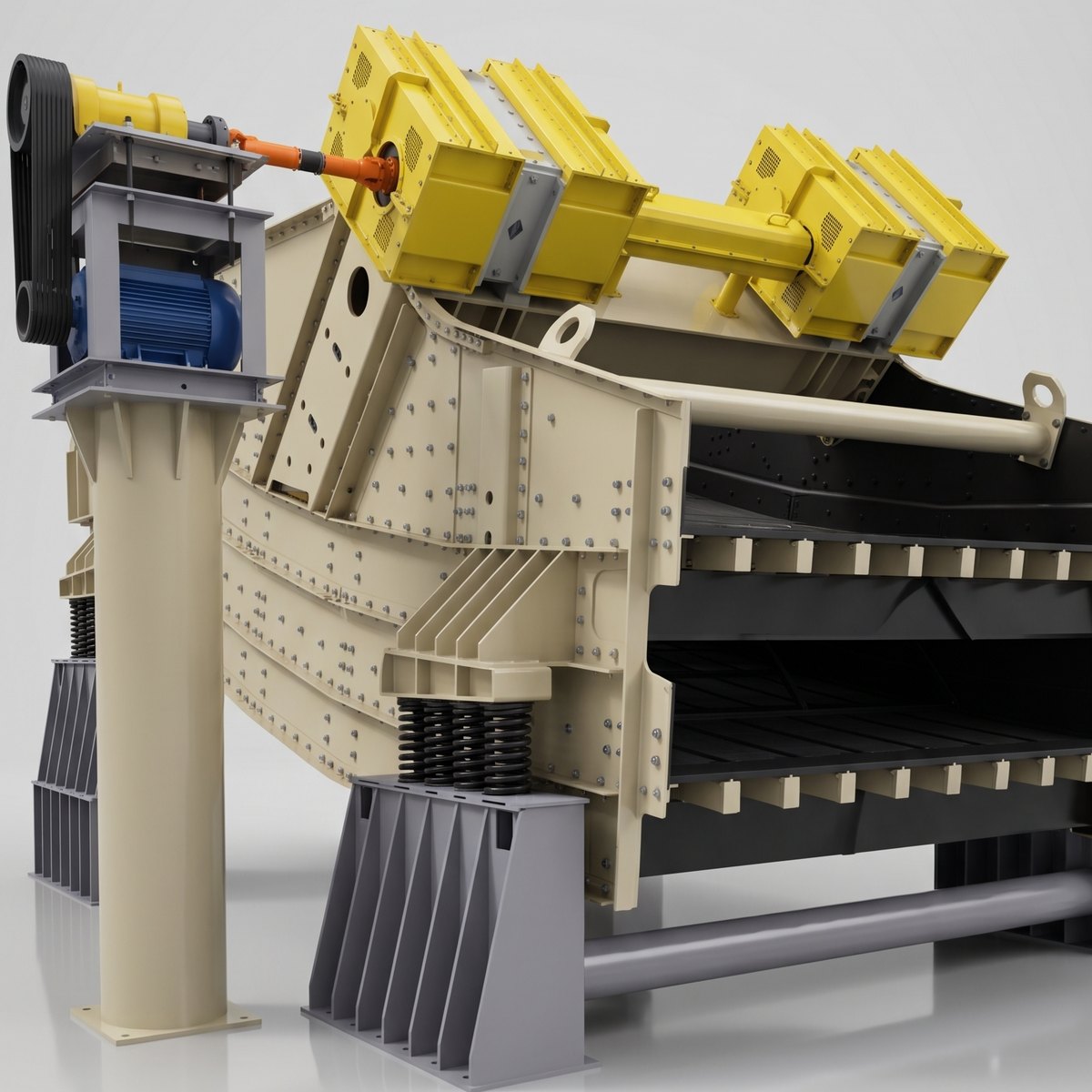
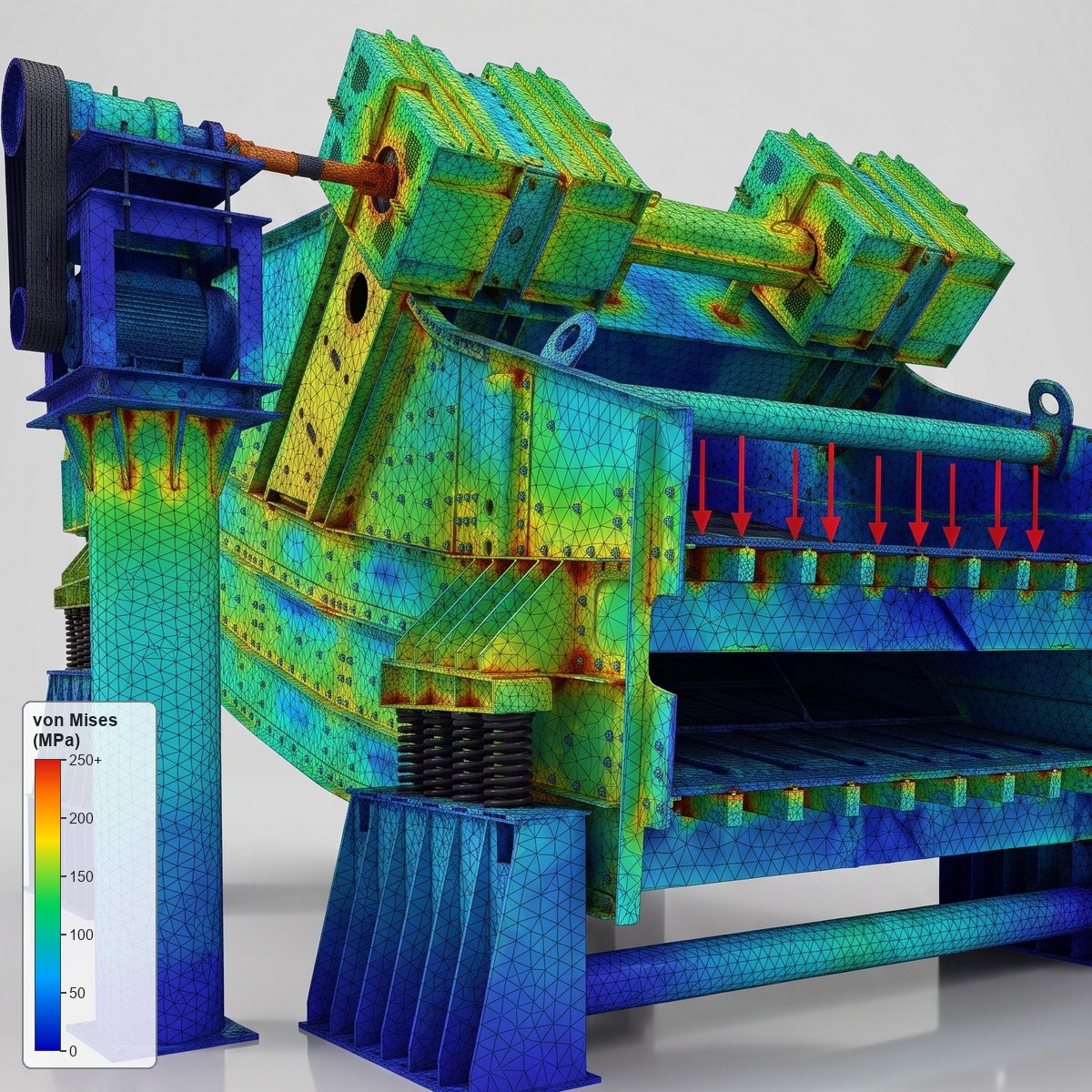
Our engineering covers design, modification and repair of screens. Our answer to the fatigue problem has been to move almost the whole component from welded joints to bolted connections: a re-engineering decision that spreads the stresses, makes maintenance easier and extends the equipment's service life. Every modification is validated with FEM structural analysis before it is carried out — in the slider below you can pick each screen and walk through that analysis, and in the no-load test see the real machine running.
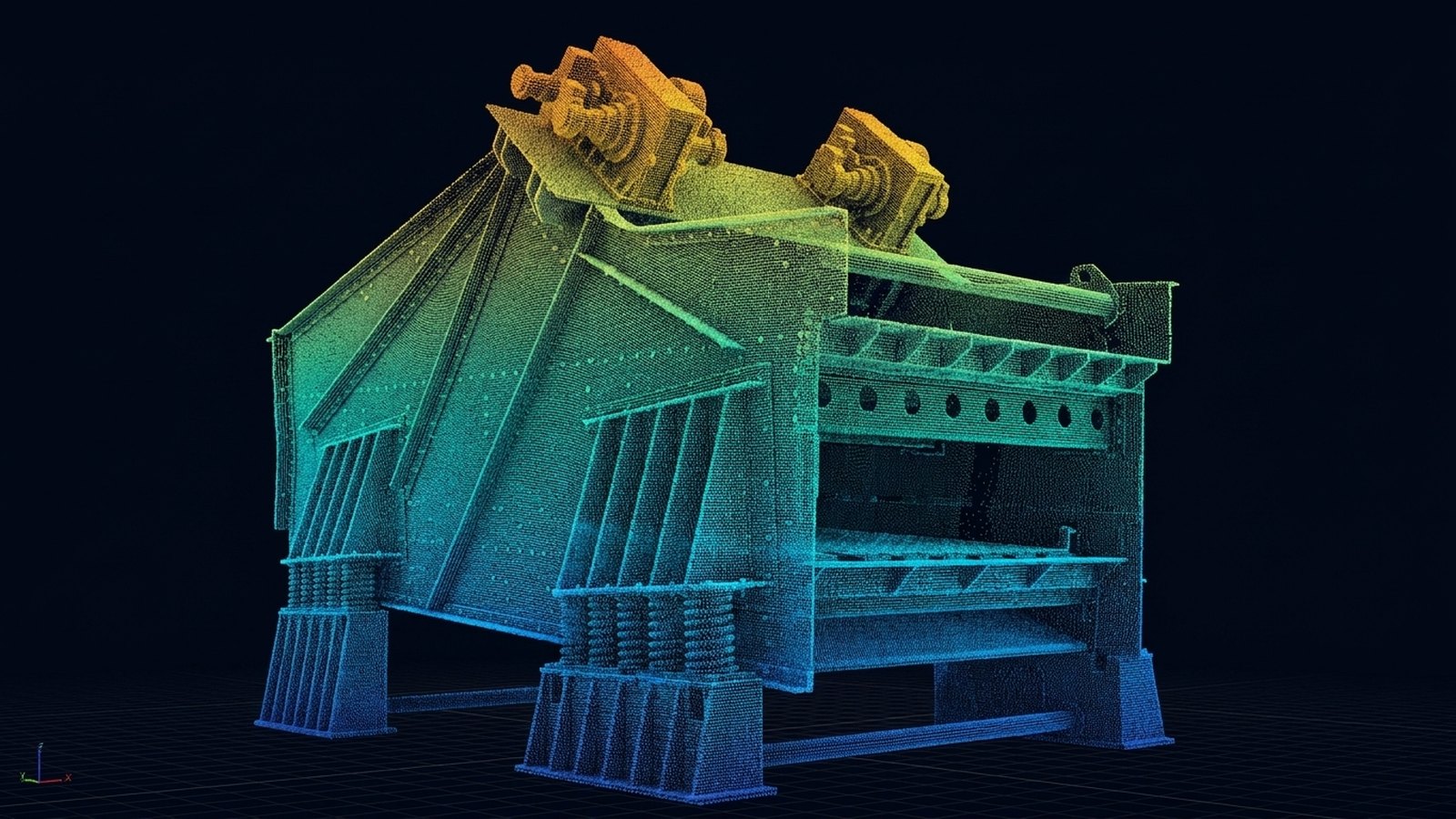
When the equipment arrives with no drawings, we start with the 3D laser scanner: we survey the machine as a point cloud, rebuild the parametric model and only then decide what stays, what gets reinforced and what moves to bolted joints. You can watch that whole transition — from point cloud to real machine — on video in the scanner and point cloud section.
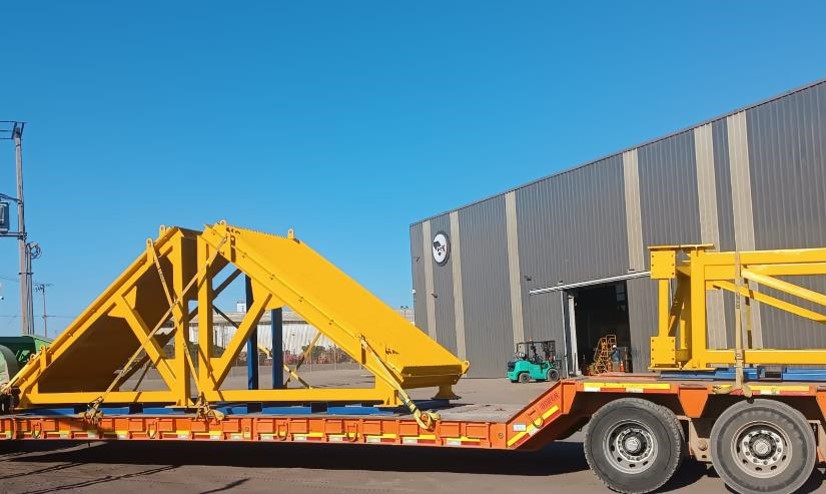
Here we bring together the range of screens we have worked on — vibrating, double-deck and large sieves — to show the span of dynamic equipment CGK handles.
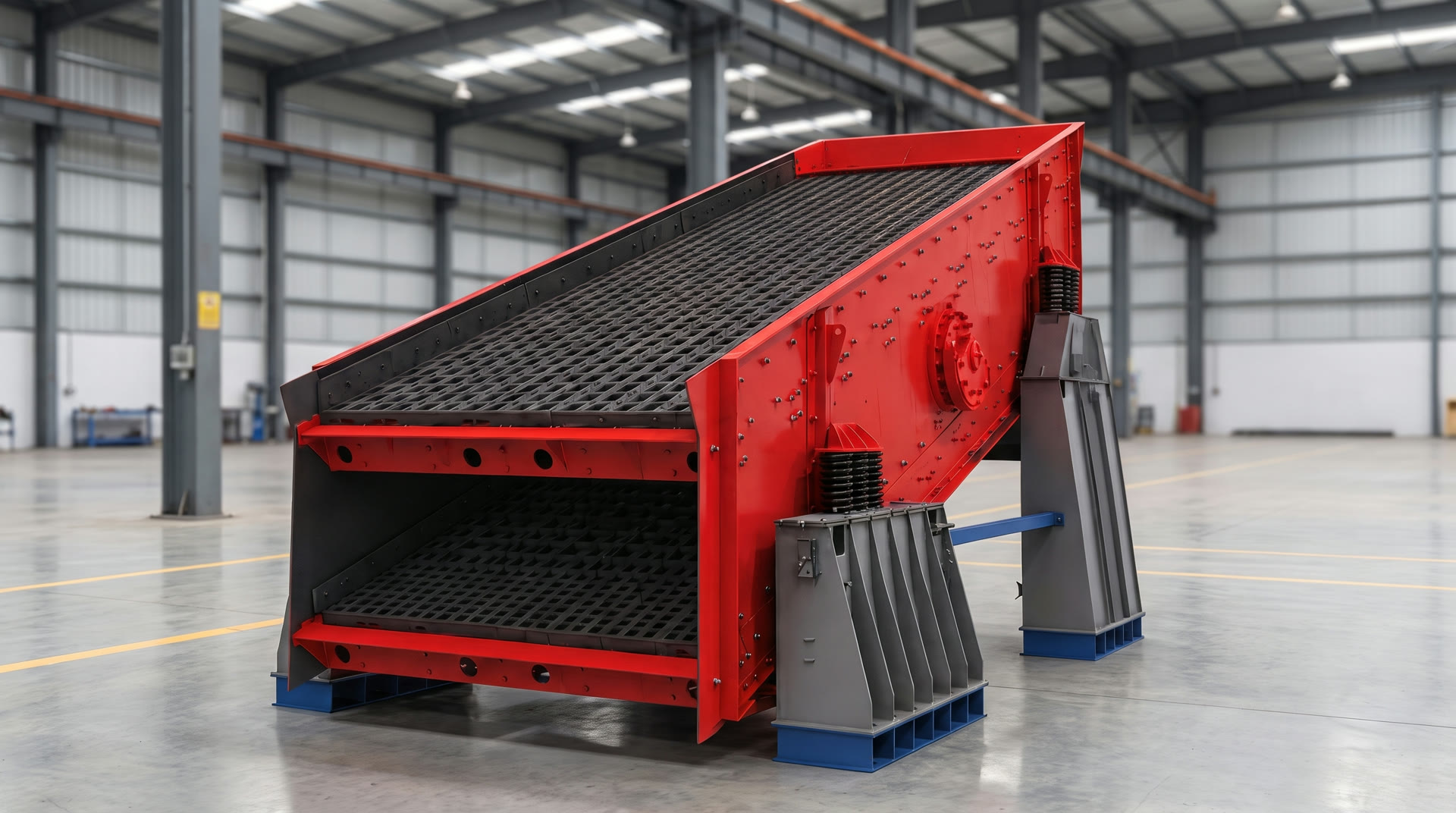
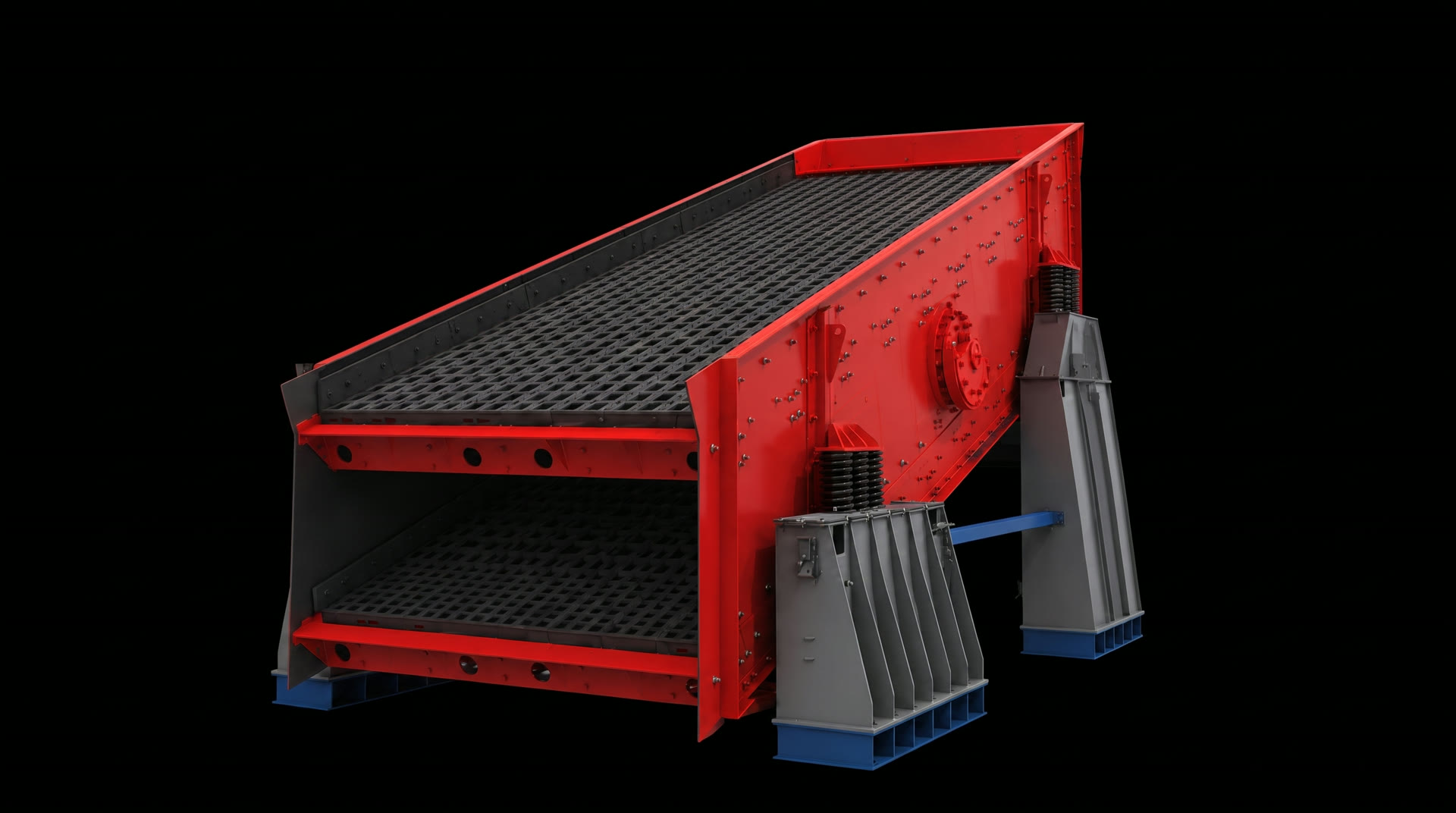
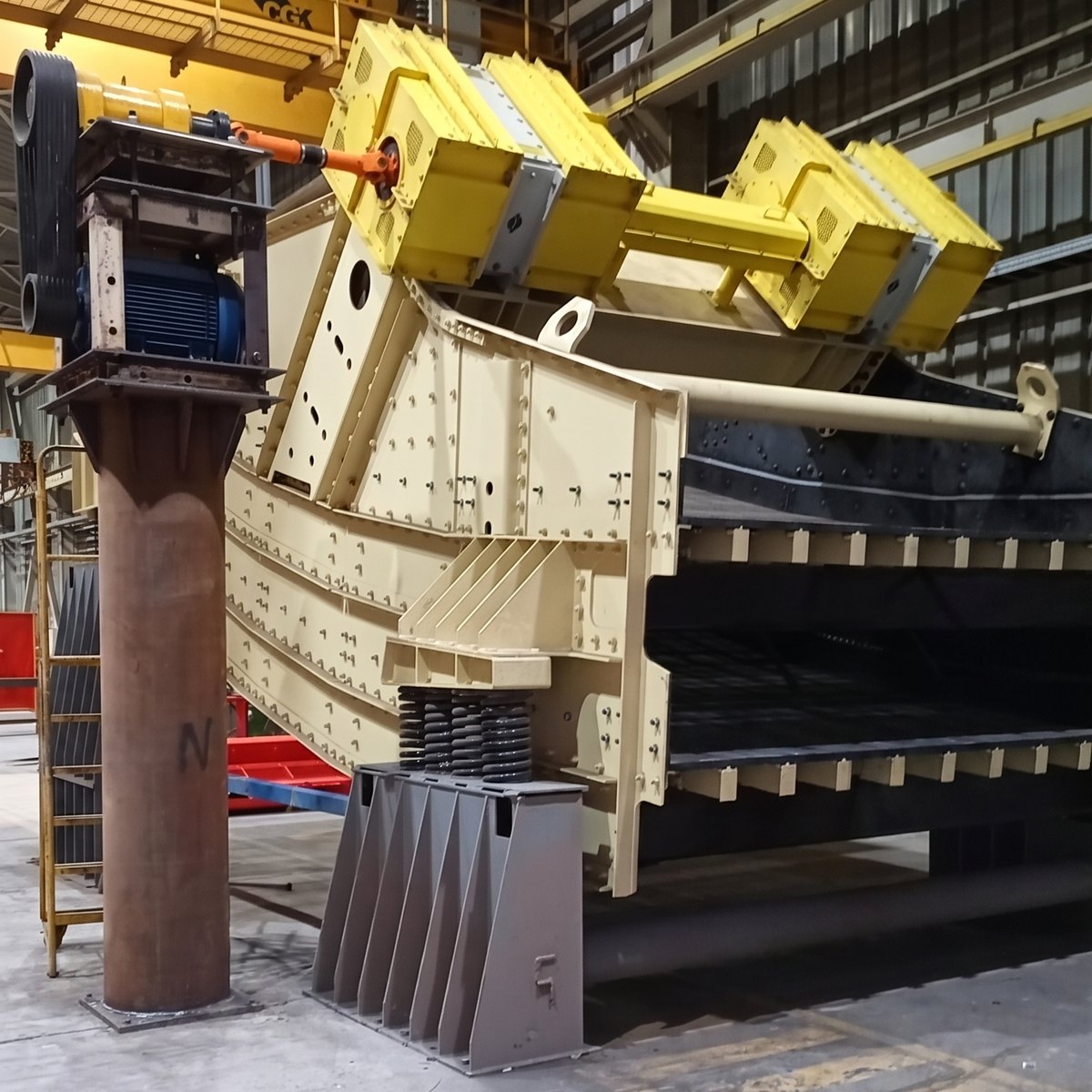
The same screens from the home page, gathered here: pick one and drag the handles to walk through the process — from the engineering render, to the FEA stress simulation, to the machine built in the workshop.
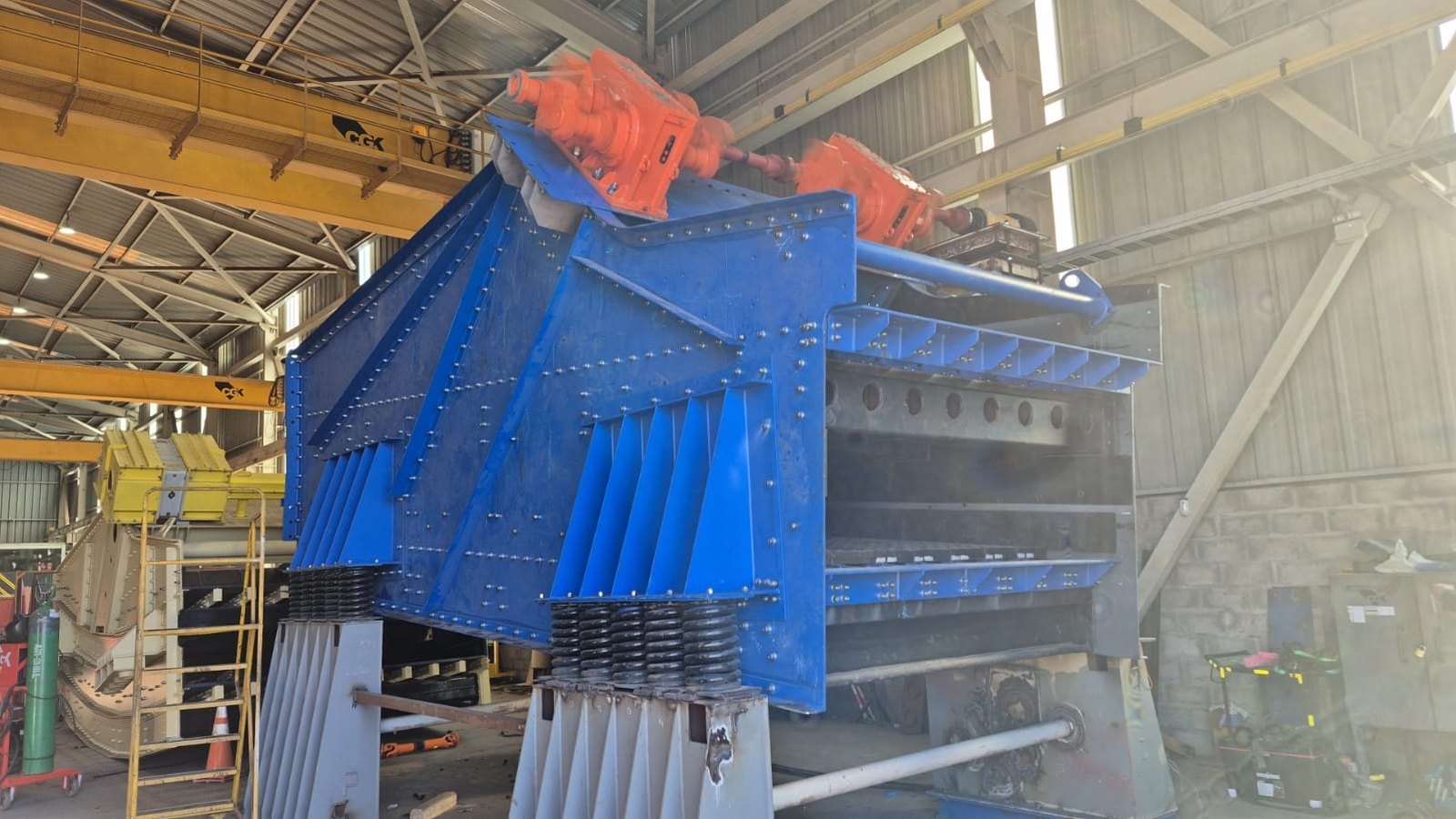
The model is validated with FEA, but the machine is validated in the workshop. This is the quaternary screen Hewitt Robins during its no-load running test: the exciters running and the machine vibrating freely on its elastic mounts, with no ore load.
The test confirms the real dynamic behaviour before the screen leaves for site: stroke amplitude and regularity, steady running on the springs through start-up and shutdown, and a check of bolts, exciters and temperatures afterwards.
From the classic vibrating screen to the large sieve. The scale and the number of decks change, but the logic stays: model it, validate it with FEM and bolt it to survive the vibration.
More components where engineering, 3D scanning and fabrication are all solved under one roof.
We scan it, remodel it and re-engineer it to bolted connections so it holds up. Design, repair and fabrication of screens and sieves under one roof.