

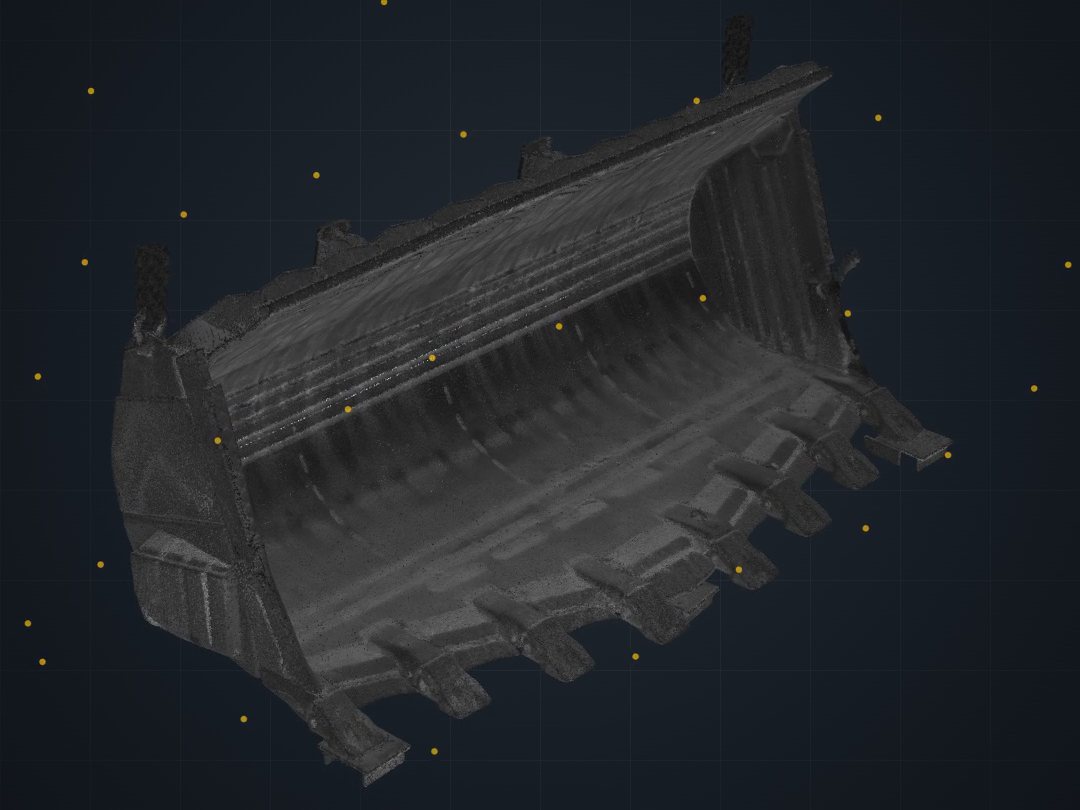
The bucket on a Caterpillar 994H loader eats steel from the first shift. By the time it reaches the workshop, welding on a patch is no longer enough: it has to be scanned, compared against the model and brought back to spec, piece by piece.
Minera Centinela sent us three buckets, each on its own work order. The inspection found what you would expect and then some: the floor base plate deformed and a heel liner that someone had previously repaired with three plates welded together. We rebuilt that one as a single liner, to our standard.
On the first one, magnetic particle testing marked more than 160 cracks adding up to almost 39 metres. The longest, 3.24 m, was on the inner face of the lip.
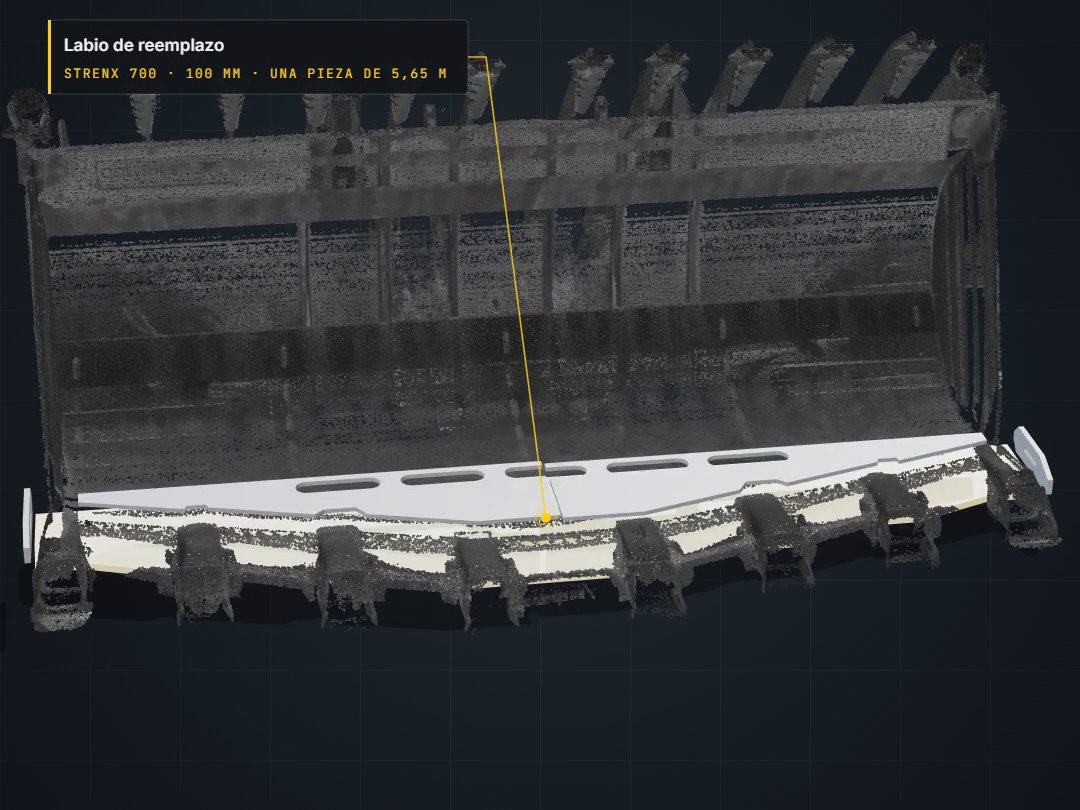
Material is not picked from a catalogue. The liners are Hardox 500, from 20 mm on the sides to 65 mm on the outer floor. Some of the wear bars and side liners are 12 + 12 mm bimetallic plate. The floor base plate and the heel pad holders are 38 mm A-572 Grade 50. On the first bucket we replaced the whole lip: Strenx 700 in 100 mm plate, a single piece of 5,650 × 1,041 mm.
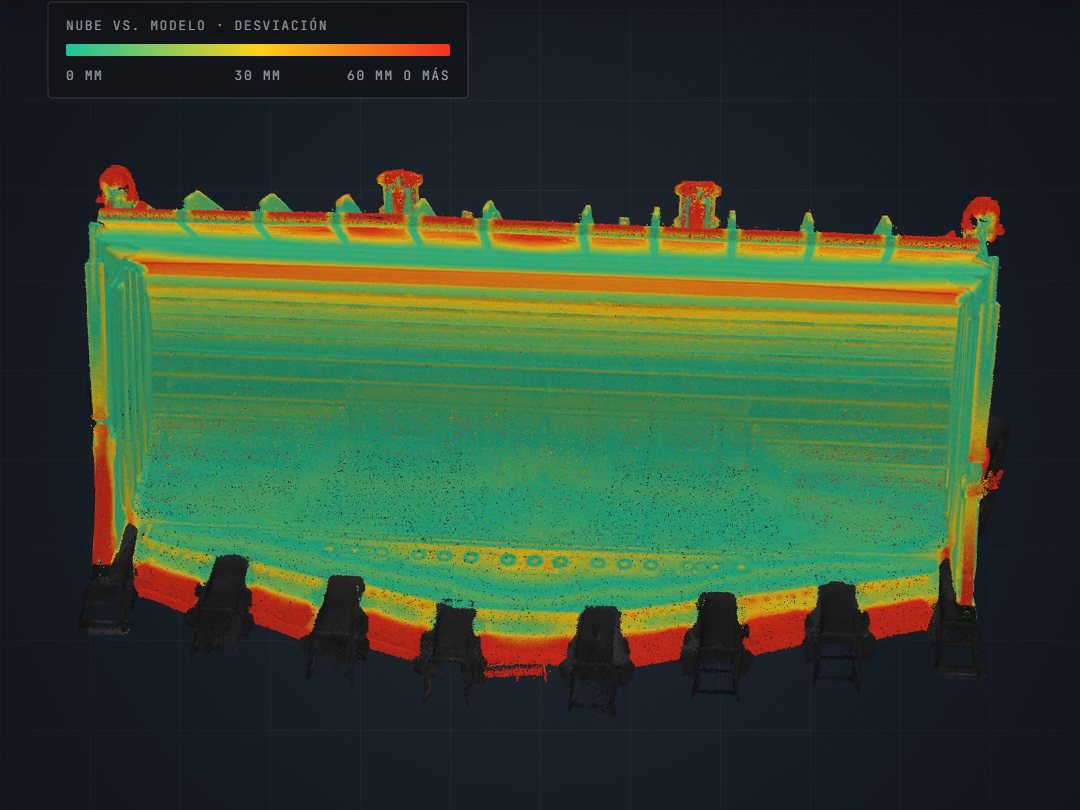
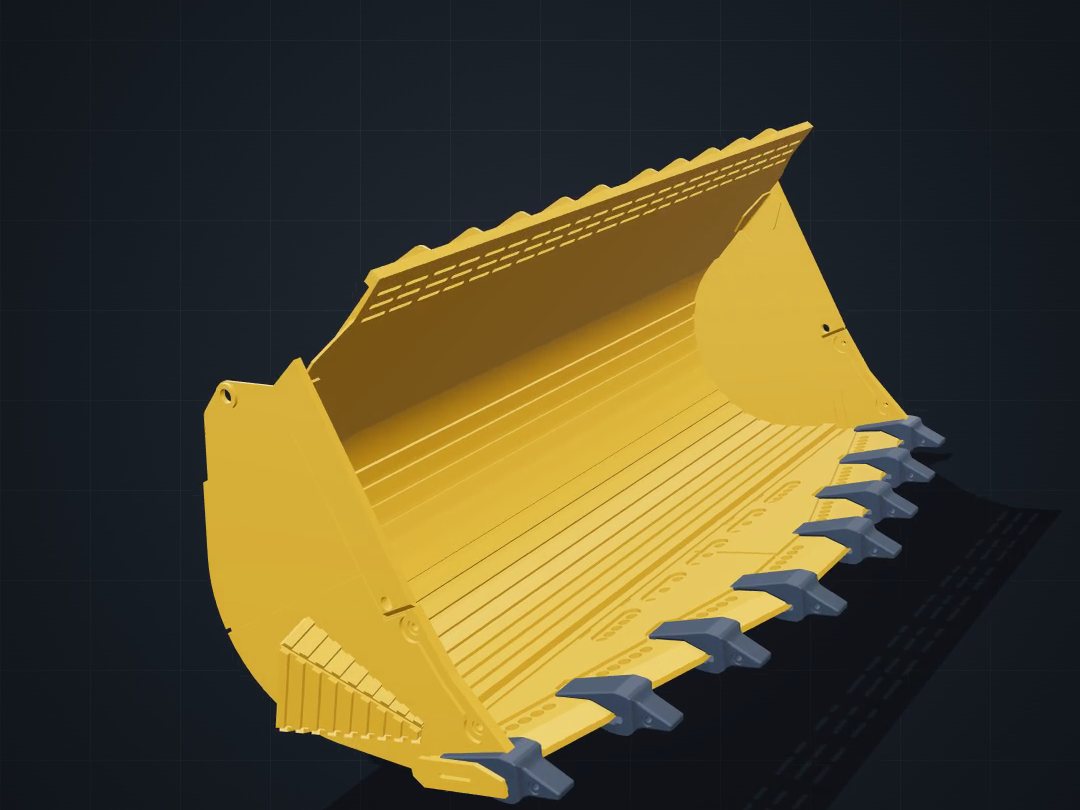
We scanned each bucket as it arrived. The 3D model was checked against a second scan, with the bucket already stripped down and shot-blasted, and that produced the drawing: 9 sheets and 54 marked plates. That is how a five-and-a-half-metre piece goes in first time.
The link pin bores came in out of tolerance: they were built up and machined to the customer's standard. The bucket leaves the workshop to spec, not in the shape the mine left it in.



Other projects
Components that arrived with no drawings and left with verified geometry.
Got a worn component with no drawings?
We scan it on site, model it and rebuild it in the workshop. We reply with a technical scope within 48 hours.